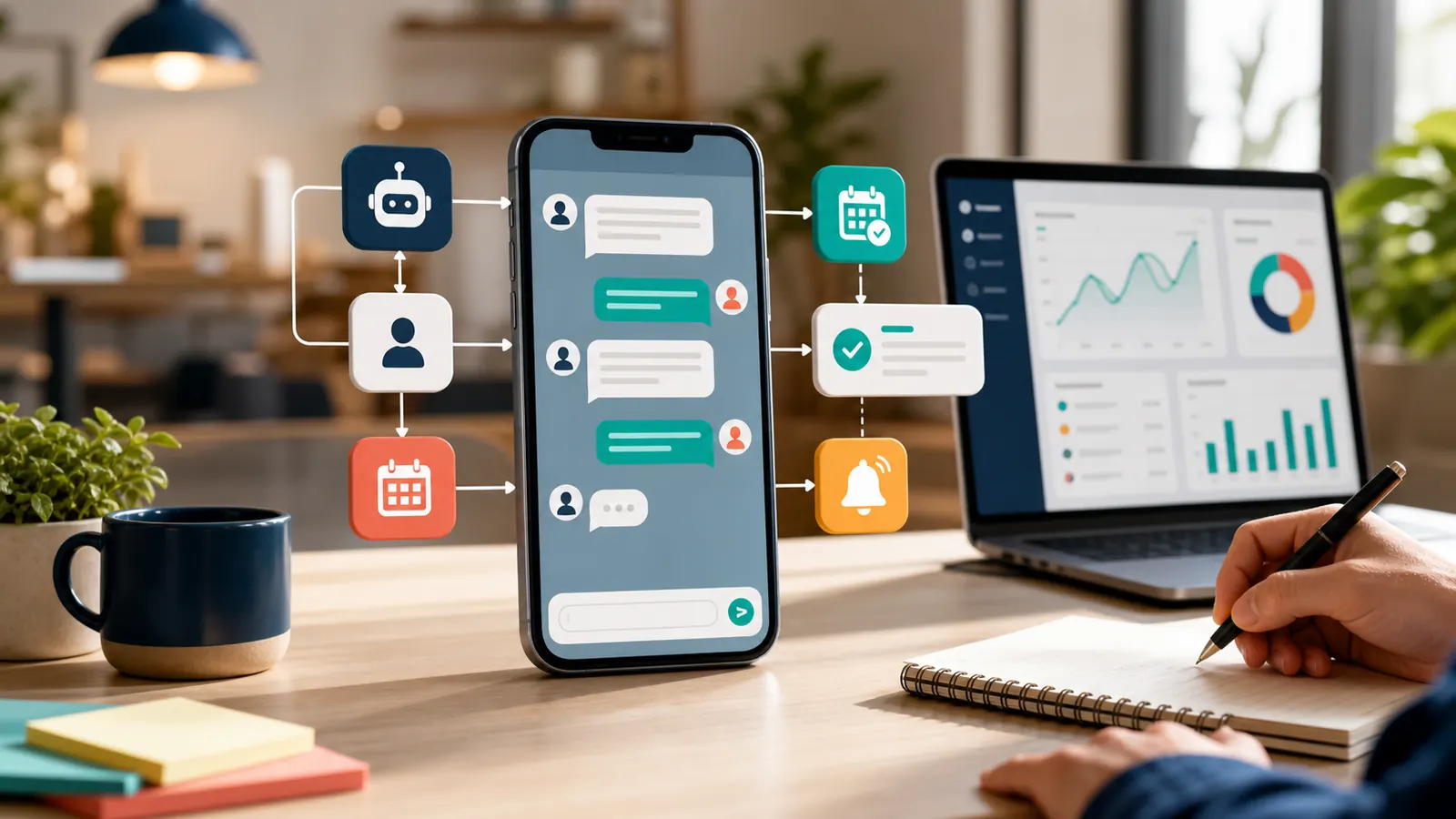
Most small businesses already use WhatsApp every day. The problem is rarely the tool. It is that messages arrive faster than one person can handle, follow-ups are forgotten, and the same five questions are answered every week. A small amount of automation around WhatsApp can take that load off without making the service feel robotic.
WhatsApp Business app vs WhatsApp Business API
The free WhatsApp Business app is enough for a single inbox with light templates and a basic catalogue. The API is what you need the moment two people answer messages, you want automation or you need to connect WhatsApp to a form, CRM, booking system or AI assistant. Most small businesses outgrow the app sooner than expected.
Five automations with the highest ROI
Start with these: an instant welcome that confirms you received the message and sets a response expectation; an FAQ flow that answers the five questions that arrive every week; a booking confirmation that summarises date, place and what to bring; a follow-up after the appointment asking for a review or a rebooking; and a quiet recovery message when a quote was sent but not answered. None of these require AI to work.
When to add AI, and when not to
AI is useful for drafting first replies, summarising long chats and routing inbound messages to the right person. It becomes risky when it is allowed to promise prices, change bookings or speak as if it were the business owner without review. The safest first step is AI that drafts and a person who approves before sending.
Connecting WhatsApp to forms, email and your loyalty card
WhatsApp is most useful when it is wired into the rest of the stack. A new contact form submission can open a WhatsApp thread tagged with the source. An email reply can update the same conversation. A loyalty stamp earned at the counter can push a friendly note. Everything stays in one timeline instead of three separate apps.
Real costs and timelines
Setup costs depend on whether you stay on the WhatsApp app or move to the API, plus the cost of a chatbot platform or custom worker. Most small businesses can launch the first three automations in two to three weeks. The recurring monthly cost is usually well below what one missed lead per month already costs the business.
When to DIY and when to hire help
DIY makes sense if you only need the basics, you have time to learn a chatbot builder and your volume is low. Hiring help makes sense when the automation must integrate with your booking, POS or loyalty system, when AI is part of the flow or when the cost of a missed message is high. The choice is operational, not technical.
WhatsApp automation, done quietly and reviewed by a human, is one of the highest-leverage upgrades a small service business can make in 2026.