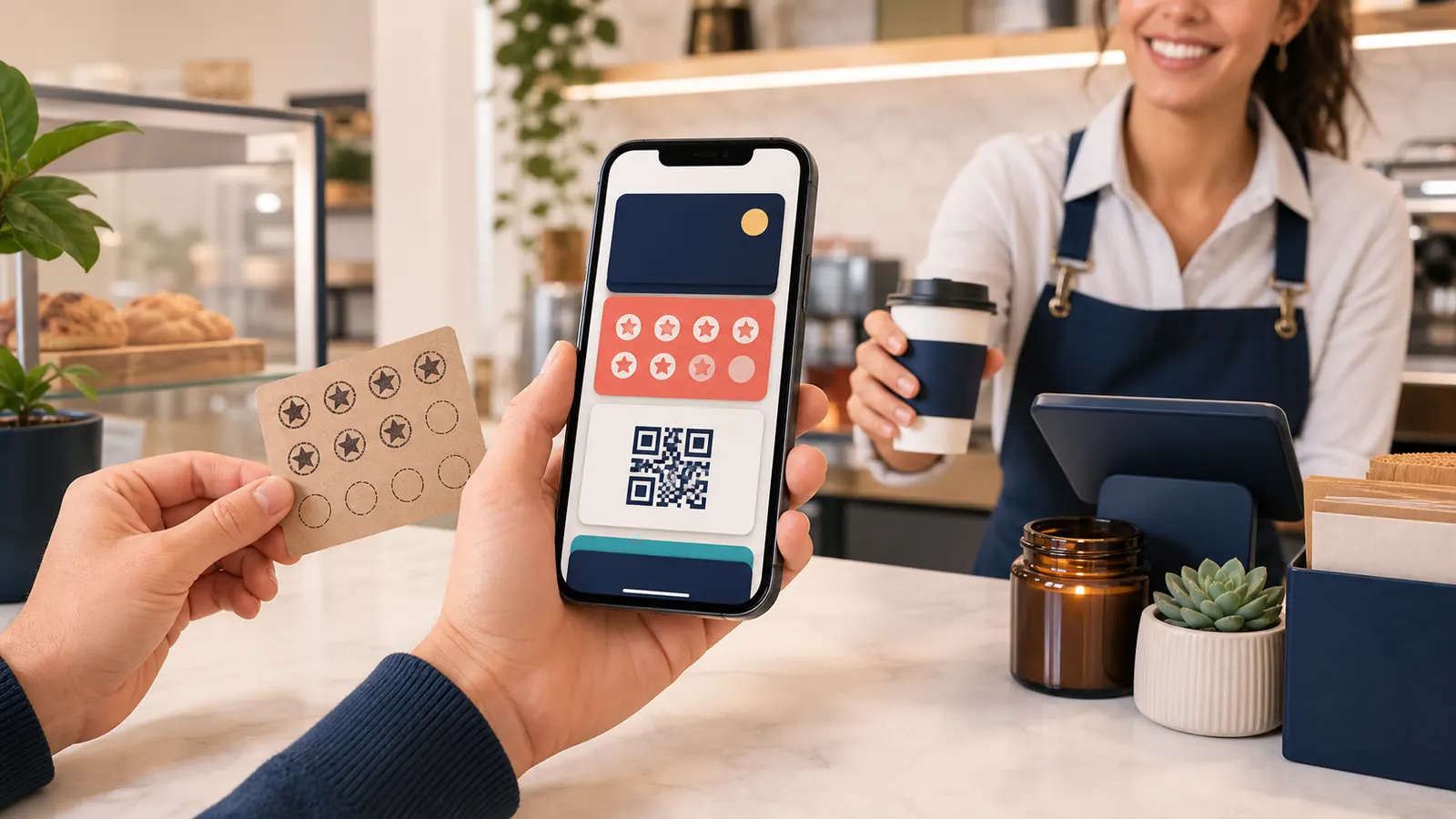
Physical stamp cards get lost, plastic loyalty cards live in a drawer and a dedicated loyalty app is one more icon nobody opens. A wallet pass, a loyalty card that lives natively in Apple Wallet and Google Wallet, quietly fixes all three problems and costs less to run than printing cards.
How a wallet pass actually works
A wallet pass is a small bundle of metadata: a customer identifier, a barcode or NFC token, an image, the colours of your brand and a few text fields like points, stamps or tier. The customer adds it once with a QR scan or a link. From then on, the pass updates silently through Apple and Google push channels, and the customer can pull it up from the lock screen at the counter.
What you need to launch one
You need brand assets (logo, hero strip, colours), a way to identify customers (email, phone or QR) and a small backend to issue and update passes. Most small businesses already have the assets and the identifier. The missing piece is usually the issuing service, which can be a SaaS platform, a custom worker or a quick integration with your POS or booking system.
Three small business setups that work
A cafe with a stamp card: ten visits earn a free drink, staff scan the customer's pass at the till and the counter ticks up automatically. A salon with visit history: the pass shows last visit, next preferred slot and a one-tap rebooking link. A retail shop with tiers: silver, gold and platinum update from sales totals, with push notifications visible only to that tier.
Integrating wallet passes with your existing tools
The pass becomes more useful when it connects to the channels you already use: a WhatsApp message after a stamp is earned, an email when the tier changes, a webhook from the POS so staff do not have to mark anything manually. None of this requires a dedicated app. The wallet pass becomes the touchpoint and the rest of the stack stays the same.
Done-for-you platforms vs custom setup
Off-the-shelf platforms get you live quickly with a fixed monthly fee and a generic design. A custom setup costs more up front but lets the pass match your brand exactly, integrate with your real systems and avoid surprises when the SaaS tier changes. Small businesses with a distinctive offer usually grow into the custom route within a year of starting on a platform.
If you are tired of reprinting stamp cards or pushing customers into yet another app, a wallet pass is the lowest-friction way to keep loyalty alive in 2026.